Where I once lived, occasionally I would bump into someone known locally as Tommy the Egg Man. Tommy was mentally handicapped and spent most days walking round and round the town on a set route. You could set your watch by when and where you saw him. People liked him because he was always cheerful and would always say hello. He was called the Egg Man because he had an allotment with chickens from where he would sell eggs. He made me smile and even though I didn’t really know him I was sad when he died recently. At a time when some world leaders disparage the poor and needy it was good to see proof of the fact that nearly all people are worthy and deserve respect.
Last week I was let into a secret. Tommy didn’t have any chickens. He bought the eggs he sold at Tesco. My smile got even bigger. Tommy went up in my estimation. Entrepreneurship it’s called, I guess. Maybe Tommy wasn’t as simple as he seemed.
“Rubbing the parched roadway with his webbed feet, he went trailing his white wings on the rough ground. Beside a dried-up gutter the poor creature, with gaping beak, was frantically bathing his wings in the dust, and with his heart full of longing for his native land, cried out….” (The Swan – Charles Baudelaire)
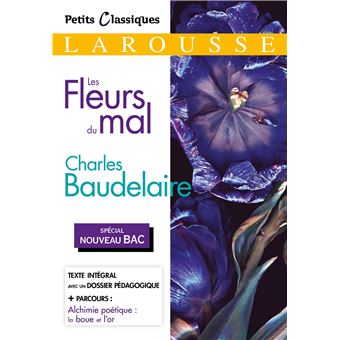
What would you fo if you saw a swan flapping helplessly on a building site. Presumably you’d try and help it. Also, probably, you might take a photo with your phone. Why would you do this? I think it would be to do with the incongruity of such a graceful bird in a concrete desert. Charles Baudelaire did just that in Paris in the 1850s. Only of course, he didn’t take a photo; he wrote a poem – Le Cygne, perhaps his best known poem in the collection “Les Fleurs du Mal”. The swan had escaped from a menagerie near the Louvre and wandered onto the huge building site that was central Paris at that time as it was being transformed into the Paris we know today. With his Realist roots Baudelaire couldn’t fail to record what he saw. But Baudelaire also wrote on the cusp of the Symbolist movement. The swan represented us, dislocated, alienated by the changing modern city. Huge numbers of prople were uprooted by the rebuilding of Paris and relocated to the suburbs, uprooted psychologically as well as physically. Soon sociologists would give this a name – anomie – the kind of alienation that leads to despair, something not unknown in the suburbs of Paris today. But more than this, Baudelaire also saw a mysterious kind of beauty in the strange placing of a swan in the rubble – a flower, indeed, among the evil. It’s what modern urban photographers look for today, strange but eye-catching juxtapositions amongst the decay. But Baudelaire did it first. Over 150 years ago. Without a phone.
In 1978 Bob Dylan played a concert at the Zeppelinfeld in Nürembergfeld in Germany, the stadium where Adolf Hitler held his rallies. Dylan insisted that the stage was placed at the other end, so that when he performed the audience had its back to where Hitler spoke as they watched and appreciated the much loved, little Jewish guy playing Masters of War.
During the 1760s the Collège de Plessis in Paris once asked its pupils to write an essay about the perfect horse. One boy described a horse that, when whipped, would buck and unseat its rider. For this, he was flogged.
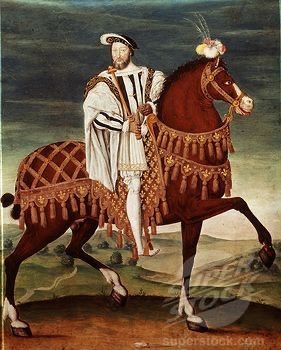
Whether consciously or unconsciously, he had touched on a raw nerve. Horses were there to be controlled by their riders. Particularly when it was a King who was in the saddle, as exemplified by many paintings down the centuries showing kings on horseback. Mastery of the by nature unruly horse represented the king’s mastery over his people. Horsemanship equated with statesmanship.
The boy grew up to be known as the Marquis de Lafayette. The flogging didn’t work. He continued to favour the underdog, those suffering at the hands of their masters. He fought in America on the side of those rebelling against the British in the American Revolution. He became a major political figure on the Republican side during the French Revolution, during which the King was unseated, fatally so.
Without knowing it, as a boy Lafayette had been part of a social change which became known as the cult of Sensibility, influenced by the writings of Jean-Jacques Rousseau: freedom over discipline, liberty over authority, heart over head.
They didn’t know it but the masters at the Collège de Plessis were swimming against the tide. Every dog has its day, they say. Lafayette would have added, even the underdog.
Honoré de Balzac wrote Le Chef d’Oeuvre Inconnu (The Unknown Masterpiece) in 1831. In it an artist spends ten years creating what he thinks is his masterpiece. When he finally shows it to two young artists they stare at it, uncomprehending. “Can you see anything?” “No, can you?” “Nothing”. “All I can see are blocks of different colour in a confused mass bound by a multitude of weird lines which form a wall of paint”. The artist is horrified “Nothing! Nothing to show for ten years of work!” In his book Balzac aims to show the futility of aiming for perfection but, 50 years before Post-Impressionism and nearly 100 years before abstract art, he unwittingly anticipates the bemused reaction to the work of artists such as Cézanne and, later, Mondrian, as shown in the photos above. In the 1880s Cézanne made around 100 paintings of one mountain, le Mont Victoire in Provence. The subject matter was a pretext. He was trying to show the problem of painting a 3D subject on a 2D canvas, using “blocks of colour” and “mulitudes of lines”. Most viewers saw confusion and weirdness. In the 20th century, artists such as Mondrian were inspired by Cézanne to limit their works to the formal elements of line, colour and “walls of paint”. Balzac is usually categorised as a Realist, a mere recorder of everyday life. The trouble with categories is they are limiting and therefore often wrong. Balzac was also a visionary.
I guess it’s not easy being a genius. People just don’t get what you’re about. Take Marcel Proust. You write a passage where someone dunks a madeleine and everyone, including critics, eulogise how sensory experience can evoke the past, a happy, romantic past. A link is made with the english translation of “À la recherche du temps perdu”, loosely translated as “In Search of Lost Time”. Times lost to our memory, now happily restored. Trouble is, “perdu” in French can mean “wasted” as well as “lost”. Proust isn’t merely telling us what we already know; that the smell of a new car can remind us of our first car. He is saying something deeper and more tragic. You waste your life by not appreciating it properly. The only time you do appreciate it is in memory – when it’s too late.
Napoleon Buonaparte once famously called England a nation of shopkeepers. He didn’t mean it as a compliment. There is evidence that maybe he was right.
Victor Hugo published his great novel Les Misérables in 1862. In France it was a sensation, political dynamite. In England, however, at least one business saw it as a promotional opportunity. The “Sixpenny” 1887 English translation included a message on the inside cover –
“What higher aim can man attain than conquest over human pain? Don’t be without a bottle of Eno’s Fruit Salt. “
I live in a South Northumberland mining town that once had at least four pits. My flat is part of what was originally a Mechanics Institute, a cultural haven for miners. For many years I worked in the town’s High School, which was built on land reclaimed from one of the local pits. The school faced a park formed round a landscaped pit heap. Opposite my flat is a cemetery containing the grave of two miners who, along with 202 others, died in the New Hartley Pit Disaster, 160 years ago, three miles from here. This week I walked around a nearby nature reserve created on the site of Weetslade colliery. The park has a monument to the mining community, an art installation caled “The Drill Bits”. It reminded me of the ruins of Dunstanburgh Castle, 30 miles up the coast, which I visited a few days ago. I saw them from a distance, both perched on a hill. The teeth of the drills look like the crenellations of a fort, and the drill bits stand like the turrets of a ruined castle. Normally, when you think of historic Northumberland, you call to mind its many splendid castles. Weetslade, however, reminds you of another important heritage, a working class one, a heritage happily still being honoured and preserved.
Gustave scrambled up the rocks which formed the perimeter of the island. He had been in good spirits as he had walked out to this small rock a hundred yards offshore at St Malo. At low tide the island jutted out from the expanse of gleaming, wet sand. When he reached the top he collapsed giggling on the grass. Another superb day on the three-month walking trip beckoned.
Gustave made an effort to compose himself. There it was. Chateaubriand’s tomb. It was empty of course. Chateaubriand had had it built 23 years earlier and thereby had unwittingly created a popular tourist site. Gustave lay back on the damp grass, closed his eyes and let his mind wander through the events of the great adventure.
He had made a deliberate choice to start the trip by walking across Paris before taking the train to the Loire. There was an element of play-acting; he was a vagabond, a gypsy, happy and free.
His first stopping place on the Loire was the town of Blois. He spent the day climbing the narrow streets from the river to the castle at the top of the hill. It was Sunday; the houses were shuttered and the streets silent. There were literary associations everywhere. This was where Hugo had grown up as a boy and one of the places from which Balzac had drawn inspiration.
Gustave imagined the people sequestered behind the shutters. He began to focus in particular on what it must be like for a woman who may already be trapped in a loveless marriage; one who, like him, had read everyone’s Romantic hero, Chateaubriand. A book was forming in his mind. He had tried before, unsatisfactorily, to express his feelings about the disappearance of the Romantic promise of the turn of the century. How bourgeois reality had dashed those hopes and dreams.
When Gustave opened his eyes and stood up on Chateaubriand’s rock he felt fully alive. Later he would remember returning to St Malo “animated, moved, almost furious”. As he walked slowly on the sand a name popped into Gustave’s mind.
There was always a moment in Spike Milligan’s long-running TV comedy series Q when he liked to break the fourth wall. To end a sketch he would face the camera and declare he had run out of lines and didn’t know how to get off stage. His arms would slump by his side as if his puppet strings had been cut and, incapable of action without his script, he would forlornly declare “What do we do now?”.
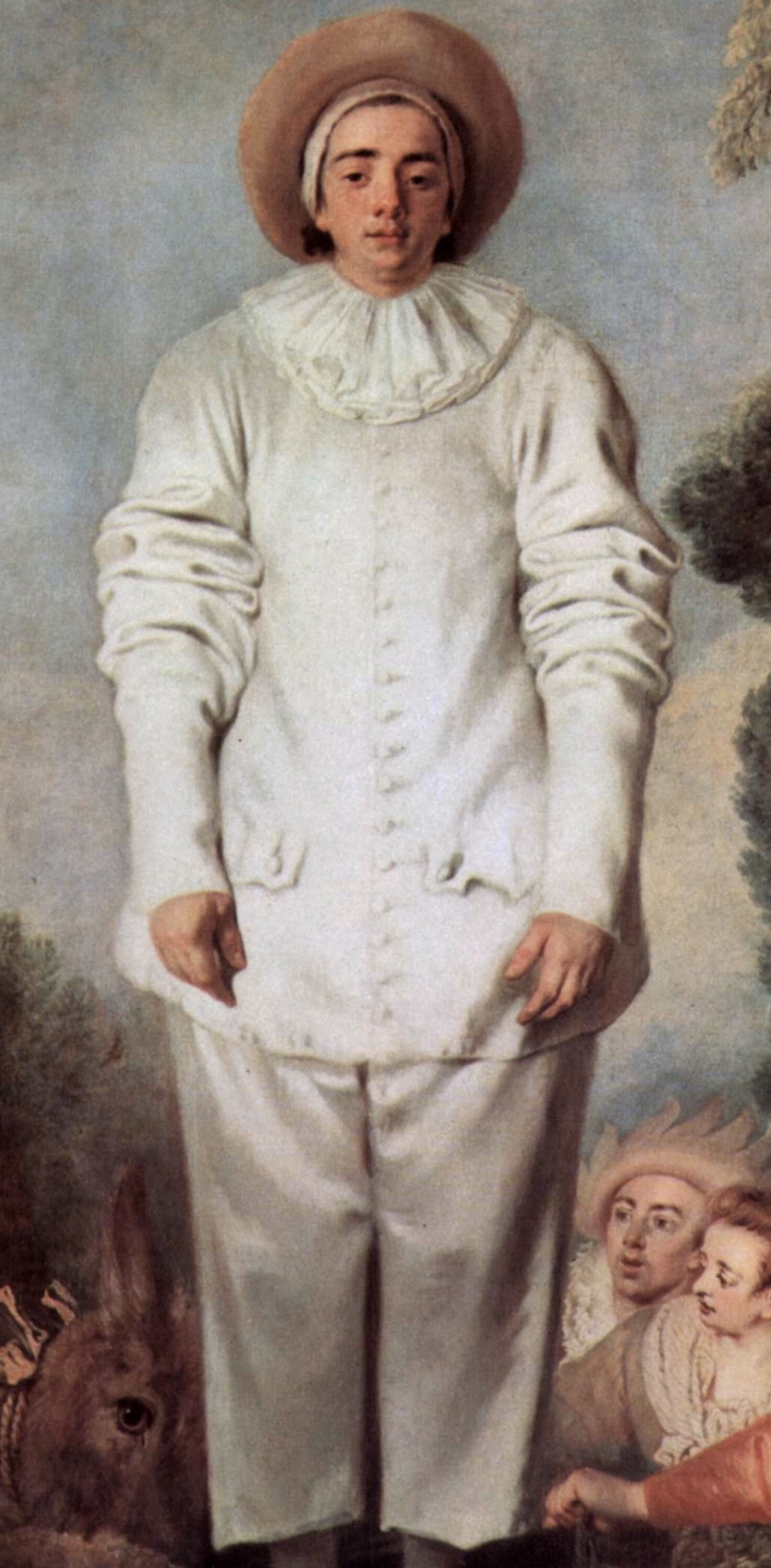
Jean-Antoine Watteau created his enigmatic painting Pierrot in 1718/19, just three years after the death of the greatest puppet-master of them all, the Sun King, Louis the 14th. For more than 70 years Louis had been the sole arbiter of life in France. France was his stage; he wrote the script and directed his people. He built the finest stage set ever seen, the Palace of Versailles. Now he was no more. Pierrot stands, like Spike, with his puppet strings cut, waiting for direction. He speaks for France “What do we do now?”








 my chautauqua